
Shipping grayscale photos at small scale
2026-03-08Underjord is an artisanal consultancy doing consulting in Elixir, Nerves with an accidental speciality in marketing and outreach. If you like the writing you should really try the pro version.
In September of 2025 Tigris sponsored an odd effort at an unusual conference. They contributed the money for manufacturing hardware devices to be used and hacked on during Goatmire Elixir in Varberg, Sweden. These devices also used Tigris for some features. Everything about it is open source. Let’s see what it turned into.
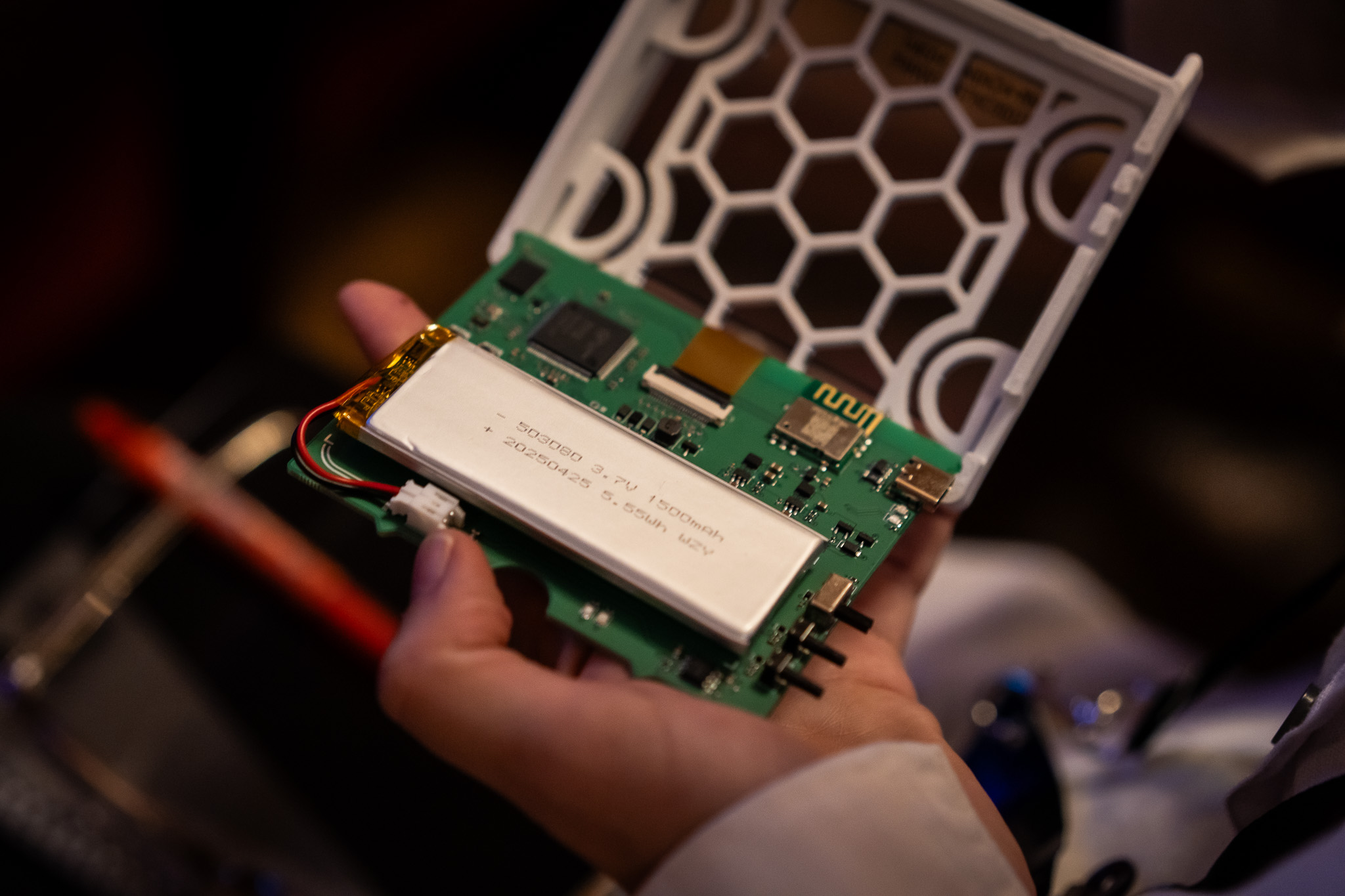
Goatmire Elixir is my (Lars') brainchild. I like the idea of a quirky event, smaller scope and people who are deeply enthusiastic about related things. So I made one, for the Elixir programming language community. In the little swedish coastal “city” of Varberg. And it was a blast.
The photo gallery is up to get a sense of the amazing presentations and all talks are available online, also on YouTube. This kind of conference can only happen thanks to companies willing to take a gamble on an idea, like Tigris did. I’m very thankful.
We made a name badge. People do that for other conferences to. And if they make a special hardware name badge they are usually based on some reasonable microcontroller. Maybe LEDs or an OLED screen. This one is a bit wild. It is a small Linux-capable device built around the Allwinner T113-S4. A 1.2 GHz dual-core ARM SoC. The hardware design is called Wisteria and is based on a core board called Trellis both are open source. Designed, implemented, sourced and made real by Gus Workman. Importantly this thing has an eInk display, a battery, a few buttons and Wi-Fi. Because who doesn’t love eInk.
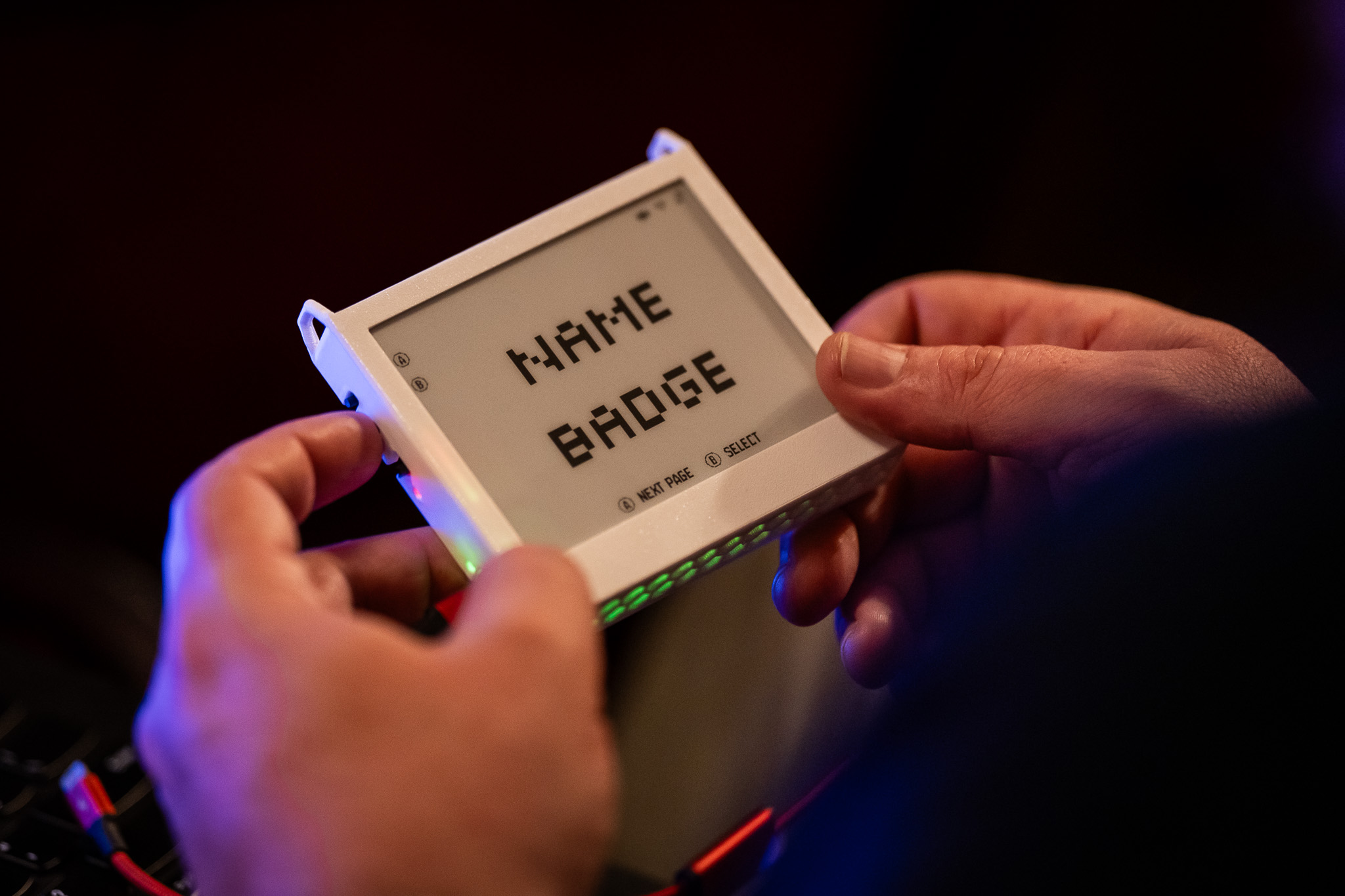
A big reason to make it a Linux-capable board is that one day of the conference was NervesConf EU. Nerves is a framework for IoT devices of the Linux-level class. So not microcontrollers, rather things with an MMU and a tractable amount of RAM. Essentially we run a barebones Buildroot-based Linux OS and the first process that boots in turn starts the legendary BEAM virtual machine. The thing Erlang runs on. Also, the thing Elixir runs on.
The reason a bunch of us like to work with Nerves is that it gives you these very strong error handling behaviors and lets you build devices at a higher level of abstraction. There are other cool things like the open source firmware update service NervesHub . That is also available as a commercial offering called NervesCloud which delivers firmware using .. Tigris!
Mostly Nerves is about Elixir and what a lovely language that is to build devices that deal with a lot of communication. Elixir inherits and builds on Erlang’s fantastic ability to deal with binary formats and networking protocols.
For this device we wanted to make it interactive and continuously helpful during the conference. So it would load the schedule for the conference. That’s helpful. It would allow you to show your name and title as a good name badge. And being eInk you could switch it off and it would just keep showing that.
It also had a photo gallery and the way this worked was that we let attendees upload photos from their phone to a Phoenix LiveView web app, the backend service for the whole thing. We’d moderate the inbound photos and whatever we approved would be converted to 1-bit black-and-white, with dithering, for display on these monochrome devices. Then they were downloaded and displayed. Rendered in the UI using Typst, a Rust-based rendering library.
Of course all media handling of uploads went through Tigris with pre-signed uploads and downloads. We didn’t really get a lot of mileage out of the distributed regions and all that considering we were the very opposite of geo-distributed at the time. Everything except our local Wi-Fi worked great.
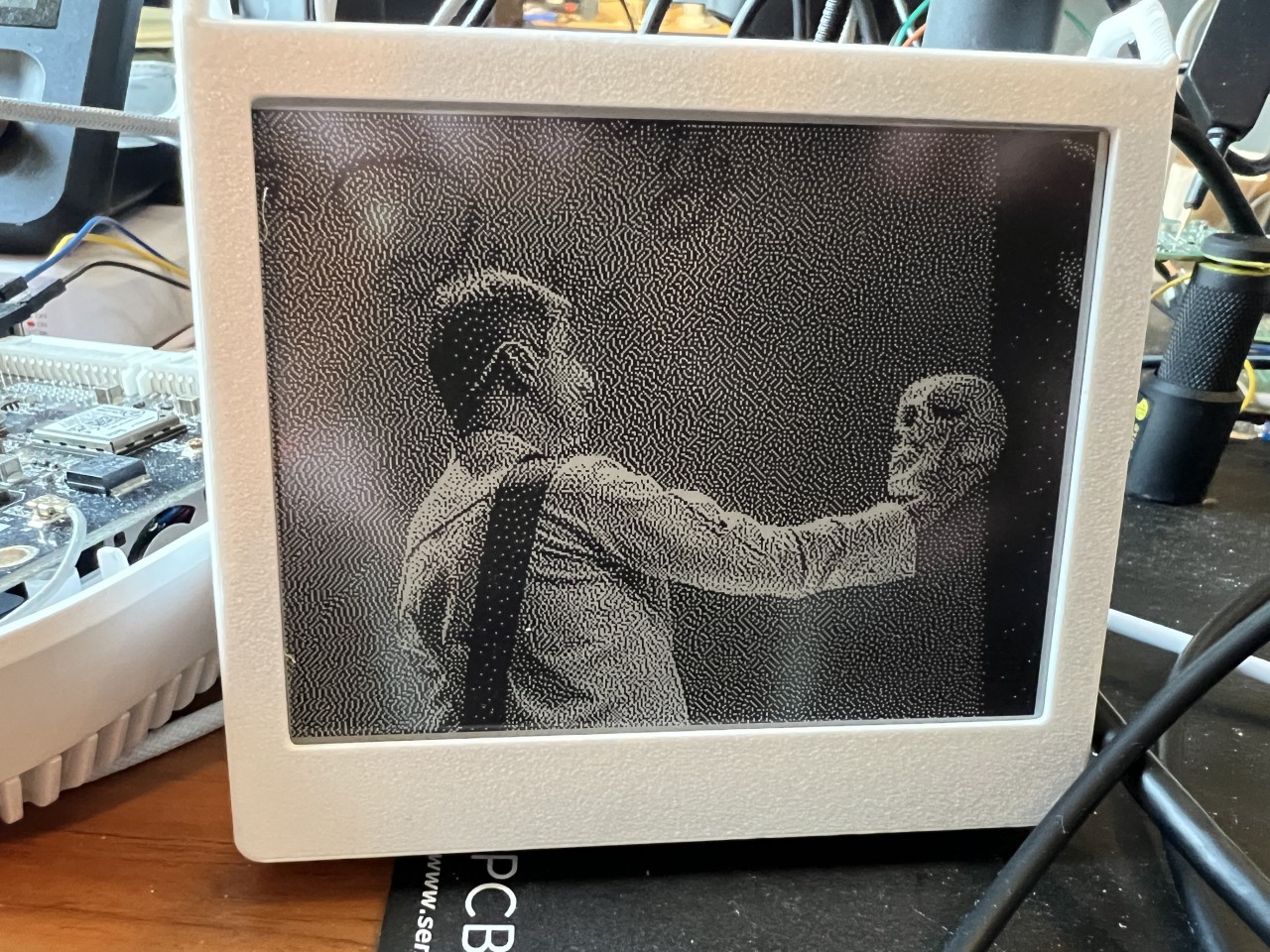
A nice feature is that all devices that were switched on would actually show the same image as the server will push new pre-signed URLs out at an interval to all connected devices. Very neat and typical Phoenix shenanigans.
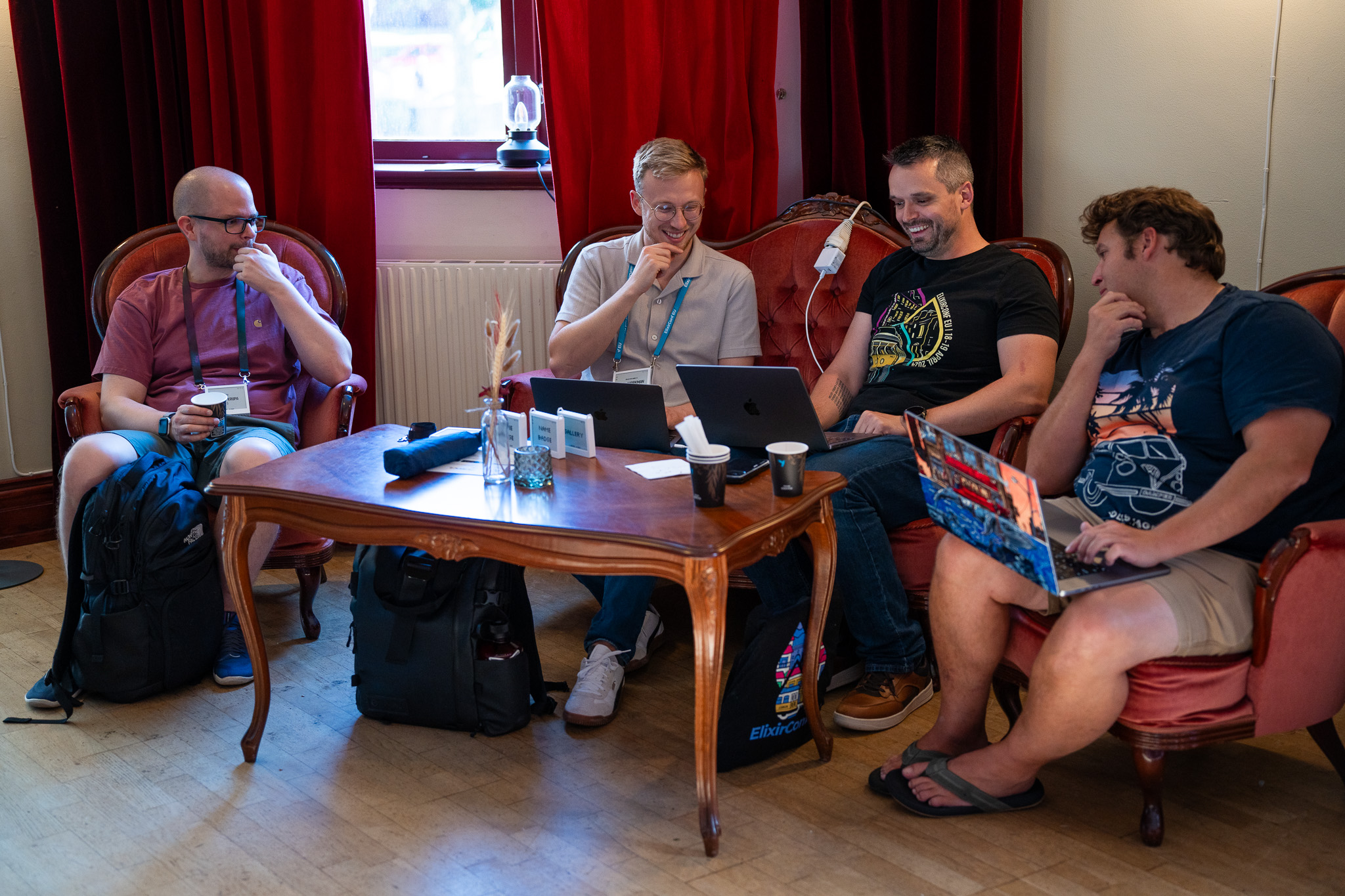
There was a lot of people poking at and hacking on the badges. The most critical thing, aside from some rather urgent bug fixes, was an implementation of Snake. The classic cell-phone game was implemented by Peter Ullrich during the conference.
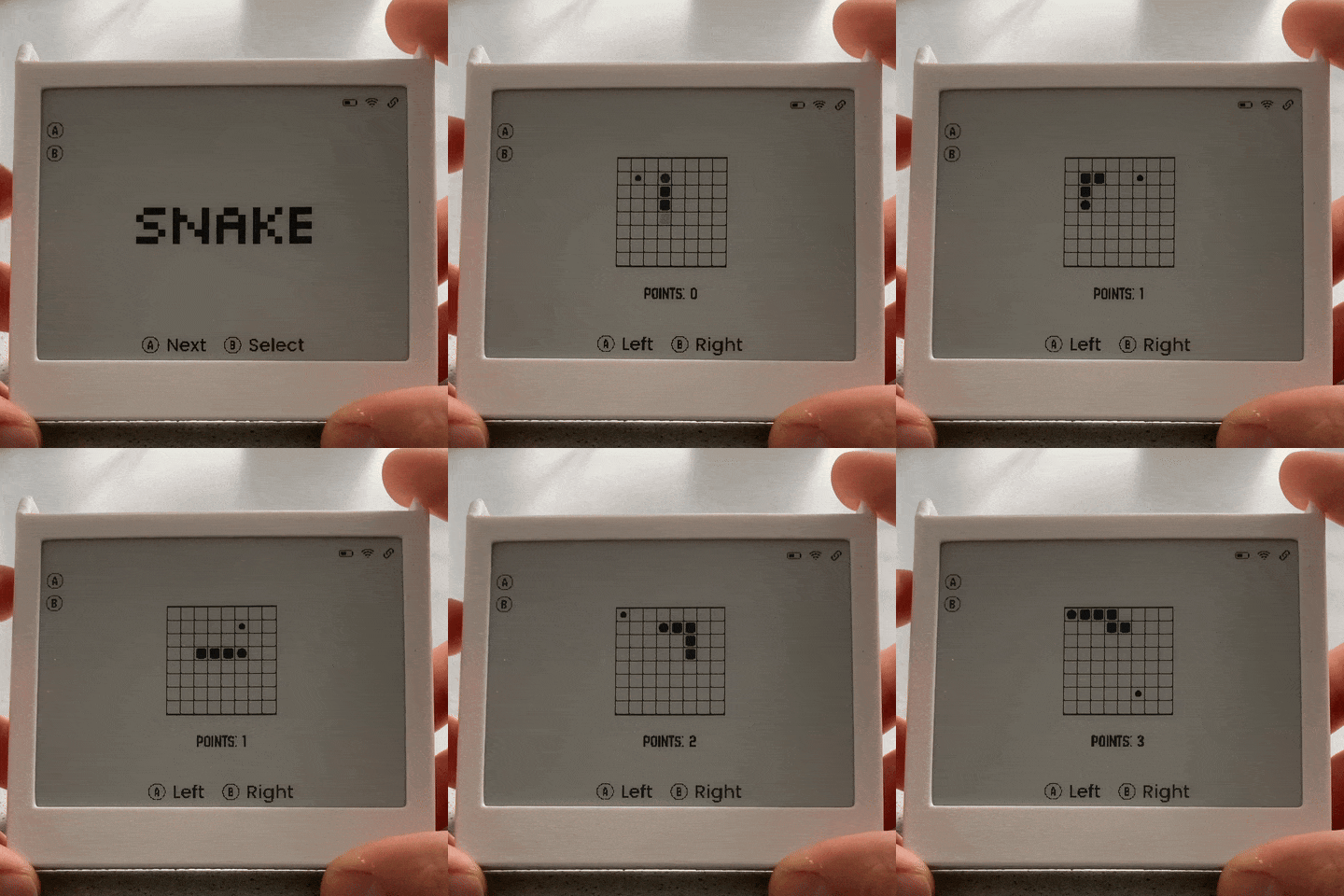
The community will keep iterating on this software and this hardware. Another batch of these were made and sent to 39C3, the Chaos Computer Congress, for some people to hack on. Gus recently presented on the Nerves Starter Kit which expands on this device with more costly and capable peripherals which will be a great boon to people getting into Nerves. And with the open nature of the hardware and software may well get supported and adopted in other ecosystems.
On the 22nd we are planning a small community event to hack on prototypes for the starter kit leading up to ElixirConf EU in Malaga as Gus is presenting in depth on the development of this kit. We have people considering putting wheels on it to make it a balance robot. The idea is to make something extensible and hackable that people can push further.
The Tigris crew is nice and friendly. We’ve worked together in the past and I don’t think they had a big plan funding those boards. I think it was a fun way to sponsor a cool thing and show their support of fun community events. There just happens to be rings on the water from an act like that. The version of the device that was made for Goatmire Elixir thanks to Tigris will ensure more iterations of open hardware and more people getting their first crack at running on hardware.
While I know Tigris can ship large files, globally at massive scale. Sometimes people want to work in the small and it also works for shipping 1-bit images, locally at a human scale.
Thanks. From me, the Goatmire team and the Nerves community.
If you have questions about any of this I’m around on the fediverse @lawik@hachyderm.io and on email lars@underjord.io.
Underjord is an artisanal consultancy doing consulting in Elixir, Nerves with an accidental speciality in marketing and outreach. If you like the writing you should really try the pro version.
Note: Or try the videos on the YouTube channel.